
More Money, More Problems

In last week’s post I told you about the big changes coming to Iowa. New legislation means that homeowners will pay lower property taxes and that future general tax revenues for cities and counties will be throttled such that they lose ground to inflation. And so — of course — local governments like Decorah will have less money to provide services.
So what’s going to be different?
More Money!
One obvious change is that homeowners will all have a little more money in our pockets going forward. My savings under the new tax law will be about $450 a year. (That’s about exactly what higher fuel prices are costing me.1)
Keeping a little bit more of our money is great news for most Iowan homeowners. Cutting residential property taxes lowers the costs of owning a home, which will be a big help to many, especially folks on fixed incomes.
After all, who doesn’t like lower property taxes?
More Problems.
As the years pass, the revenues local governments collect will be worth less and less as the 2% cap on revenue growth eats into the value of the dollars collected. This may happen fairly quickly, because the things that cities and counties spends the most general tax dollars on (like skilled labor, public safety expenses, and land) have historically risen in cost far faster than 2% per year.
How Will Local Government Respond?
Cities and counties will probably respond to this and other changes in the law in a several ways, some of which will be positive, some negative, and all of which will work together to blunt the law’s impact, prolong the status quo, and double down on some huge mistakes local governments already are too prone to making.
1) Increased Debt Spending - The 2% growth cap doesn’t apply to stuff that local governments have to pay for no matter what it costs: employee benefits, insurance, and paying off debt. So expect cities and counties to start financing more infrastructure using debt. This is incredible news . . . if you’re a Des Moines bonding firm. There are checks on this — there are lots of rules limiting local government debt. But over time, local Iowa governments are going to become more debt-oriented because the amount they can tax to pay off debt is not capped by the 2% rule.
2) Shift the Burden - While there’s a massively-increased tax exemption for owner-occupied housing, there is no parallel exemption for other kinds of property. So under this law, owners of factories, businesses, second homes, and rental properties will pay for a proportionately higher percentage of their local governments’ spending. This will be popular with homeowners who will think the State made my taxes go down! It will be very unpopular with businesses who will think my local government made my taxes go up!
3) Raise Taxes Every Year - Because the law’s 2% cap creates a “use it or lose it” incentive, local governments will be inclined to collect the most in general property tax revenues that they’re eligible to collect each year.
4) General Funds for General Purposes - Cities will very quickly get out of the bad habit of using general tax dollars to subsidize other city activities.
5) Cut Services - As general tax dollars are increasingly squeezed by inflation, local governments will have to find ways to reduce spending. That means cutting services. In Decorah, the general fund is the main funding source for police, fire, the library, parks & recreation, administration, and the airport.
6) Rob Peter, Pay Paul - Local governments will be incentivized to tap into alternate revenue streams to support services that were formerly paid for with property taxes. It will be more attractive to use things like fees, hotel taxes, and franchise revenues to pay for stuff when possible. In Decorah, we currently use these kinds of revenues to fund economic development, tourism promotion, and sustainability initiatives.
7) Defer Maintenance - This is already an ever-present temptation for local government officials and staff, who often are long gone when the consequences of deferred maintenance come due, but I fear it will get worse.
8) Find New Revenues - Local governments will make sure that user fees and utility rates get closer to covering the costs of actually providing those services (this is good). Decorah will have to ensure non-residents who benefit from our programs and services pay their fair share (this is probably necessary, but will make people very angry). But here’s one thing that really worries me about this law — projects with upfront revenues and long term deferred costs will now look even more attractive to cash-strapped Iowa communities. This will worsen an already ongoing financial disaster.

Summary
Iowa homeowners will pay less in property taxes next year. Other Iowa property owners will likely pay more.
Over the coming years, local governments’ purchasing power will steadily erode. Many cities and counties will probably try to do what they can to keep the plates spinning — more deferred maintenance, more debt spending, more new revenues, and more fiscally-irresponsible development — but it won’t be enough. Service cuts are coming too.
In my next post, I’ll talk about why the state government pursued property tax relief so relentlessly. I’ll also share how I think the new law could be improved as it is tweaked in the coming years.
I’ll also discuss how and why Decorah (and other local governments) should avoid the many bad incentives baked into this new law.
-sz
Postscripts
Stronger Decorah is helping host a Walk/Bike celebration this Saturday!

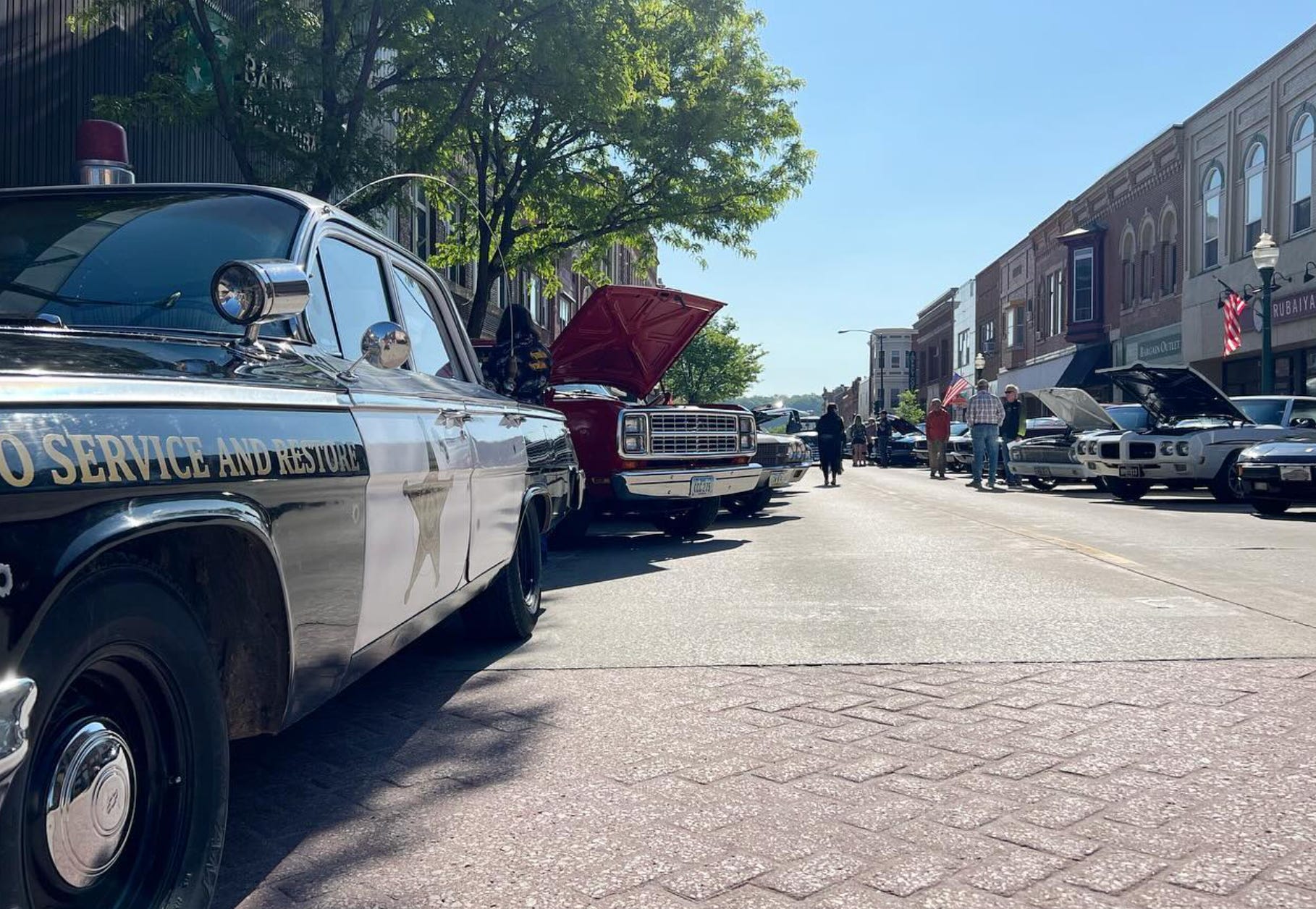
And earlier on Saturday the Police Department is planning “Cops & Rodders” again! Stroll downtown from 9 to 1, grab a cold brew or visit the Farmer’s Market, and check out a great car show that supports an important cause.

Built for Manhattan, Applied to a Farm is a great post from Chuck Marohn of Strong Towns. Read it to understand part of the reason your local government is broke.
If you appreciate Dear Decorah, please share this post with someone else who might like to read it. Dear Decorah is free. Invest in our Parks.
My 2016 Subaru Forester gets around 26 miles per gallon and I drive about 9,000 miles a year, so I burn about 346* gallons of gas each year. According to AAA I’m paying $1.32 per gallon more for gas than I did a year ago, which adds up to $457 per year.